StabProof Lightweight Stab-Resistant Clothing in Europe | StabApparel Europe
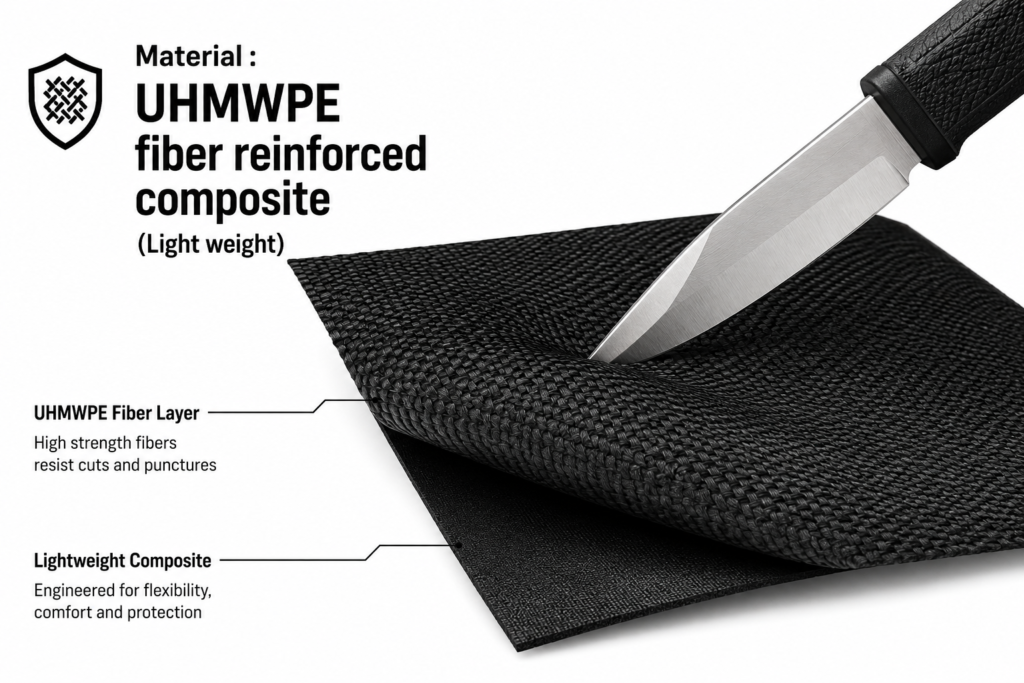
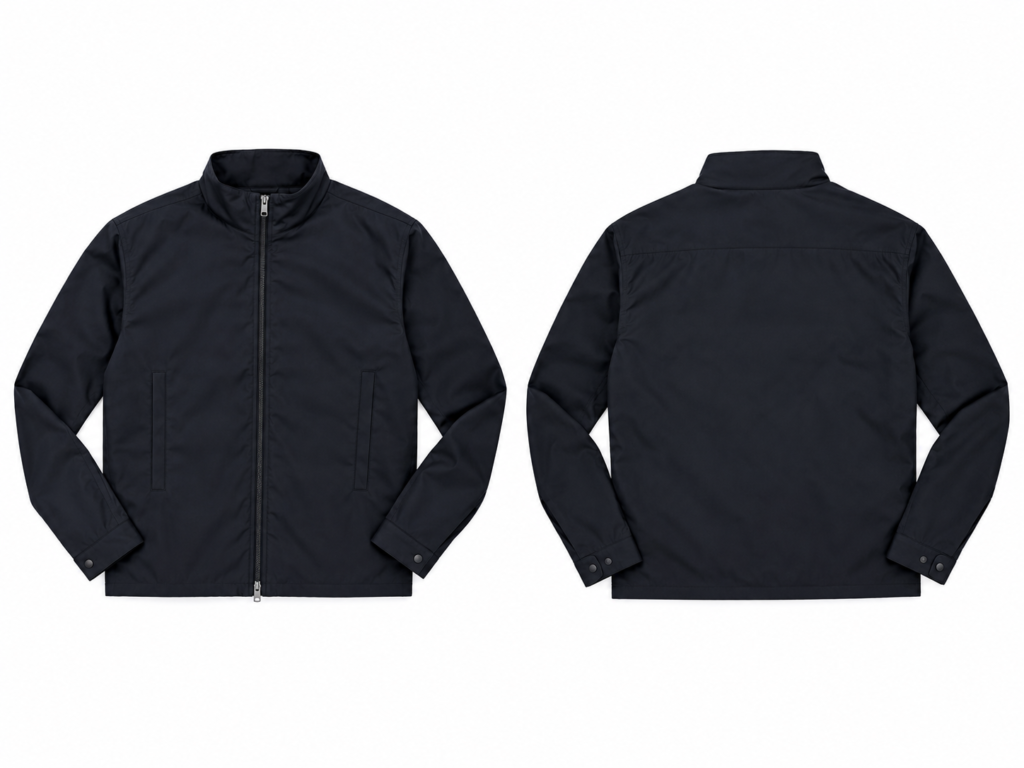
Stabproof Smart Jacket: comfortable and light weight
The Best lightweight, comfortable stabproof stab-resistant clothing for everyday wear and work. Discover StabApparel products, buying advice and European delivery options
Choosing stab-resistant clothing involves more than finding a garment that looks discreet or feels comfortable. Buyers need to understand what a product has actually been tested to do, which areas of the body it covers, how it should fit, and whether its documentation supports the intended use.
This guide explains the main considerations when comparing lightweight stab-resistant clothing for everyday wear and professional environments. It covers garment design, fit, comfort, protective performance, product documentation, care, purchasing terms and the questions individuals and organisations should ask before ordering.
It also explores purchasing considerations for eight European markets: Ireland, Denmark, Finland, Norway, Austria, Czechia, Portugal and Poland. The aim is to help buyers make informed decisions and help organisations assess whether a garment is appropriate for a defined workplace risk.
StabApparel offers a range of garments presented on its website as lightweight protective apparel, including shirts, jumpers, hoodies and vests. Before choosing a particular item, customers should review its current product description, size information, intended use and available test documentation. No garment should be treated as a guarantee of safety or assumed to provide protection against every type of blade, point or impact.
StabApparel also advertises promotional gifts, shipping and duties-and-taxes arrangements. As eligibility and destination conditions can vary, buyers should confirm the current terms before placing an order.
Whether you are an individual comparing everyday clothing or a professional buyer sourcing garments for a team, this guide provides a practical framework for evaluating the options. The central principle is simple: choose products according to documented performance and the real requirements of the intended use, then assess comfort, fit, service and total cost.
Table of contents stabproof clothing
- What Is Stab-Resistant Clothing?
- Why Lightweight and Comfortable Protective Clothing Matters
- Everyday Clothing Versus Professional Protective Workwear
- How to Choose Stab-Resistant Clothing
- Stab-Resistant Clothing in Ireland
- Stab-Resistant Clothing in Denmark
- Stab-Resistant Clothing in Finland
- Stab-Resistant Clothing in Norway
- Stab-Resistant Clothing in Austria
- Stab-Resistant Clothing in Czechia
- Stab-Resistant Clothing in Portugal
- Stab-Resistant Clothing in Poland
- Other European Markets Worth Validating
- Buying for Specific Industries
- Pricing, Value and the StabApparel Offer
- Product Care, Fit and Long-Term Ownership
- Frequently Asked Questions
- Final Buyer Checklist
- Sources and Further Reading
1. What Is Stab-Resistant Clothing?
Stab-resistant clothing is a category of protective apparel designed to resist penetration under specified test conditions. Depending on the product, its construction and its documented purpose, a garment may be intended to provide protection to particular areas of the body from certain pointed or bladed threats.
The term describes a protective objective, not a promise that a wearer cannot be injured. Results depend on the product’s construction, the area covered, the threat involved, the force and angle of contact, the garment’s condition and the test method used to assess it. A product’s name or marketing description alone is not sufficient evidence of its protective capabilities.

Understanding the different types of protection
Protective clothing terms are sometimes used interchangeably in advertising, even though they may describe different properties.
Stab resistance concerns resistance to penetration by a pointed object under defined conditions. The relevant test method, test equipment, performance criteria and garment design all matter. A claim of stab resistance should therefore be supported by documentation that identifies what was tested and what the results mean.
Cut resistance concerns resistance to a sharp edge cutting through a material. A textile can resist a slicing action without necessarily providing the same performance against penetration by a pointed object.
Slash resistance is commonly used to describe resistance to cutting or slicing actions. Its meaning depends on the claim and the test method being referenced, so buyers should check the supporting evidence rather than rely on the term alone.
Ballistic protection concerns threats from projectiles and is assessed through different requirements and test methods. A garment described as stab-resistant should not be assumed to offer ballistic protection unless that additional capability is explicitly documented.
These distinctions matter when comparing products. A label such as “cut-resistant”, “anti-slash”, “puncture-resistant” or “stab-resistant” should not be treated as proof that a garment offers every other type of protection.
Why test documentation matters
A useful product specification should explain the garment’s intended purpose and provide clear information about its protective performance. Depending on the product and the claim being made, buyers may need to ask for:
- The name and model of the product tested.
- The identity of the laboratory or conformity-assessment body, where applicable.
- The test method and version used.
- The result and any applicable protection classification.
- The areas of the garment covered by the assessment.
- Any restrictions on use, cleaning, maintenance or replacement.
- The relevant conformity documentation for products placed on the market as personal protective equipment (PPE).
The International Organization for Standardization publishes ISO 13998:2003, a standard addressing protective aprons, trousers and vests used against cuts and stabs by hand knives. Its scope includes design, penetration and cut resistance, sizing, ergonomics, cleaning, marking and user information. It is important, however, to confirm whether a particular standard is applicable to the garment and intended use in question; its existence does not establish that any particular StabApparel product has been tested to it. Read the ISO standard overview.
Everyday protective apparel and occupational PPE
Some products are marketed as everyday clothing with protective features, while others are intended to function as personal protective equipment for work. The legal classification depends on the product’s intended purpose and claims, not simply on whether it resembles an ordinary T-shirt, jumper or vest.
For products that fall within the scope of the EU PPE Regulation, Regulation (EU) 2016/425 sets requirements for the design, manufacture and placing of PPE on the EU market. Relevant obligations can include conformity assessment, marking, instructions and documentation. Buyers should ask the supplier to identify the applicable requirements and provide the documents relevant to the exact product. The European Commission provides an overview of the regulation and related standards. European Commission: Personal protective equipment.
Norway participates in the European Economic Area, but buyers should not assume that every customs, import or national implementation detail is identical to that of an EU member state. Requirements should be confirmed for the destination and intended use. Great Britain also has its own guidance for PPE supplied to the market. UK Health and Safety Executive: Product safety and supply.
What should buyers expect from a responsible supplier?
A responsible supplier should explain what the garment is intended to do, what evidence supports its claims and what limitations apply. Product descriptions should be specific enough for customers to make comparisons without implying absolute protection.
For StabApparel, buyers should review the current product page and request any missing technical documentation before relying on a garment for a particular risk. The company’s website describes several styles of protective clothing, but customers should confirm the precise features, coverage, specifications and testing applicable to the product they intend to purchase.
The best starting point is not the broadest claim or the most persuasive headline. It is a clear match between a documented product capability and the buyer’s actual requirement.

2. Why Lightweight and Comfortable Protective Clothing Matters
Protective clothing is useful only when it is suitable for its intended use and can be worn in the conditions for which it was selected. Comfort is therefore a legitimate purchasing consideration, but it must be assessed alongside documented protective performance rather than used as a substitute for it.
For individuals, the priorities may include a discreet appearance, a familiar clothing style and a fit that works with normal daily activities. For employers, the considerations may include consistent sizing across a team, compatibility with uniforms, suitability for the work environment and whether staff can wear the garment for the required period.
Weight and wearability
Garment weight can affect how clothing feels throughout the day. A buyer comparing two products should look for the actual weight of each garment in a comparable size and configuration. If one item includes removable protective components and another does not, the comparison should make that distinction clear.
A lighter garment is not automatically more protective, and a heavier garment is not automatically safer. Weight alone cannot establish protective performance. Buyers should compare documented test results and the intended coverage of each product before using weight as a deciding factor.
Where the manufacturer provides reliable measurements, compare like with like: the same garment size, similar coverage and the same configuration of removable components. If the supplier does not publish the weight, ask for it rather than relying on descriptions such as “ultra-lightweight”.
Fit and sizing
Fit affects comfort and how a garment sits on the body. A garment that is too tight may restrict movement or feel uncomfortable over long periods; one that is too loose may not sit as intended. The correct fit depends on the garment design, the manufacturer’s instructions and the way the product is intended to be worn.
Before ordering, consult the product-specific size guide. Check the measurement method, available sizes, whether measurements refer to the garment or the wearer, and whether the item is designed to be worn directly against the body or over other clothing.
For professional orders, size selection should be planned rather than left until garments arrive. Organisations may need to gather measurements, allow staff to check sizing and confirm whether exchanges are available. Customised or branded orders may have different exchange conditions, so those terms should be reviewed before the order is approved.
Breathability and temperature
The comfort of protective clothing can vary with the material, garment construction, fit, layers worn underneath and the temperature of the working environment. A garment that feels comfortable during a brief fitting may feel different during an active shift or in a warm indoor setting.
Ask the supplier what information is available about materials, care, breathability and intended wearing conditions. Do not assume that a garment is breathable or suitable for prolonged use simply because its marketing describes it as lightweight.
Where staff wear protective clothing during physical work, consider the complete clothing system. Uniforms, outer layers and other PPE may affect heat, mobility and comfort. Employers should assess these factors as part of their wider workplace risk assessment.
Mobility and daily activity
A garment should be assessed in the context of the tasks the wearer needs to perform. Sitting, standing, reaching, bending and ordinary work movements may affect how a product feels. For professional use, consider whether the design is compatible with the role and whether it can be worn alongside other required equipment.
Any practical fitting assessment must follow the supplier’s instructions. Do not attempt improvised penetration or weapon tests on a garment: such tests cannot reliably establish compliance and may damage the product or create a safety hazard.
Appearance and discretion
Some buyers prefer protective apparel that resembles ordinary clothing; others need visible, uniform-style workwear. The right choice depends on the environment, employer requirements and the product’s actual design.
A discreet appearance does not establish the level of protection. Likewise, a garment that looks like professional protective equipment should not be assumed to meet a particular standard without supporting documentation.
StabApparel presents casual garments and professional workwear as part of its range. Buyers should confirm the current options, colours, sizes and customisation availability on the relevant product pages before making a decision.
A practical comfort checklist
Before choosing a lightweight stab-resistant garment, ask:
- Is the garment suitable for the intended use?
- What test documentation supports its stated protective performance?
- What body areas does it cover?
- Is the garment weight published for the size being considered?
- Does the size guide explain how to measure correctly?
- What materials and care instructions are provided?
- Can it be worn comfortably with the other clothing or equipment required?
- Are alterations, repairs or replacement components restricted by the manufacturer?
- What happens if the fit is unsuitable?
- Are the product’s limitations and conditions of use clearly explained?
These questions help buyers compare comfort without allowing lifestyle language to obscure the technical evidence. The aim is to find a garment that meets the required protective criteria and is practical for the person who will wear it.

Undetectable Knives and Blades
3. Everyday Clothing Versus Professional Protective Workwear
Everyday protective clothing and professional protective workwear may share design features, but they are purchased for different reasons. The most appropriate option depends on the intended use, the risk assessment, the garment’s documented performance and the conditions in which it will be worn.
A consumer may prioritise a familiar clothing style and ease of wearing. A security company or other employer may need to evaluate multiple sizes, product consistency, written documentation, care requirements and the suitability of a garment for a defined role.
Neither category should be assumed to offer a particular level of protection based on appearance alone.
Everyday protective clothing
Everyday garments may be designed to resemble T-shirts, polo shirts, jumpers or hoodies. Buyers often look for clothing that can be incorporated into an ordinary wardrobe without changing their usual style.
Before choosing this type of product, consider:
- Intended use: Confirm the situations for which the garment is designed and the limitations stated by the supplier.
- Coverage: Establish which parts of the body are covered and whether that matches the intended purpose.
- Fit: Use the correct size guide and confirm how the garment is meant to be worn.
- Documentation: Ask for evidence supporting the specific protective claims.
- Care: Check whether normal washing is permitted and whether the protective components require special treatment.
- Returns: Review the current policy, including any hygiene-related restrictions or conditions for unused items.
Everyday styling should not lead buyers to assume that the product can replace a professionally selected protective system where a formal risk assessment calls for one.
Professional protective workwear
Professional buyers generally need to assess the garment in relation to a job or workplace. This can require more information than an individual consumer would normally request.
For example, an organisation may need to determine whether the garment is suitable for the tasks performed, whether its documented performance matches the identified hazard, whether the product can be supplied in the required size range, and whether employees can wear it alongside other PPE.
Procurement teams should also review the supplier’s product documentation, delivery arrangements, warranty, after-sales support and process for dealing with faulty items. For larger orders, buyers should confirm stock availability, lead times, branding requirements and the conditions that apply to customised garments before committing to a purchase.
Employers should not select protective clothing solely because it is marketed to their industry. The product must be appropriate for the identified risk and comply with applicable requirements.
Comparison table
| Purchasing consideration | Everyday protective clothing | Professional protective workwear |
|---|---|---|
| Main decision | Suitability for individual use | Suitability for a defined role and workplace |
| Fit | Correct individual size | Consistent sizing across the workforce |
| Protection evidence | Documentation for the selected product | Documentation matched to the workplace risk assessment |
| Appearance | Personal preference and daily clothing style | Uniform, branding and workplace requirements |
| Compatibility | Ordinary clothing and personal needs | Other PPE, uniform and job-related equipment |
| Quantity | Often one or a few items | May involve multiple sizes and repeat orders |
| Care | Clear instructions for the individual | Care instructions that can be applied consistently |
| Procurement | Product price, delivery and returns | Total cost, availability, documentation, support and purchasing terms |
| Customisation | Usually a personal choice | May require logo approval, production lead time and special terms |
This table is a general buying framework, not a claim that every product in either category has the same properties.
Questions organisations should ask
Before purchasing protective workwear for a team, a procurement manager should establish:
- What hazards have been identified in the workplace risk assessment?
- Which documented product performance is required?
- Does the proposed garment provide suitable coverage?
- What conformity documentation and user instructions are available?
- Are the size range and fit options appropriate for the intended workforce?
- Can the garment be worn with other required PPE?
- What cleaning, inspection and replacement instructions apply?
- Are the warranty, returns and defect procedures clear?
- Are delivery times and quantities confirmed in writing?
- What additional terms apply to logos, custom sizing or bulk orders?
The answers should be recorded and reviewed by the people responsible for procurement, occupational safety and end-user training.
Where StabApparel fits into the decision
StabApparel’s website presents both individual garments and a professional workwear offering, including a programme aimed at organisations purchasing for their workforce. It also refers to bulk pricing and custom branding. Buyers should confirm the current terms, available products, minimum order quantities and delivery arrangements directly with the company before relying on these options. Visit StabApparel.
The important question is not whether everyday apparel or workwear is universally better. It is whether the specific product is supported by suitable documentation and matches the wearer’s needs. For organisations, that decision should be part of a documented procurement and risk-assessment process.
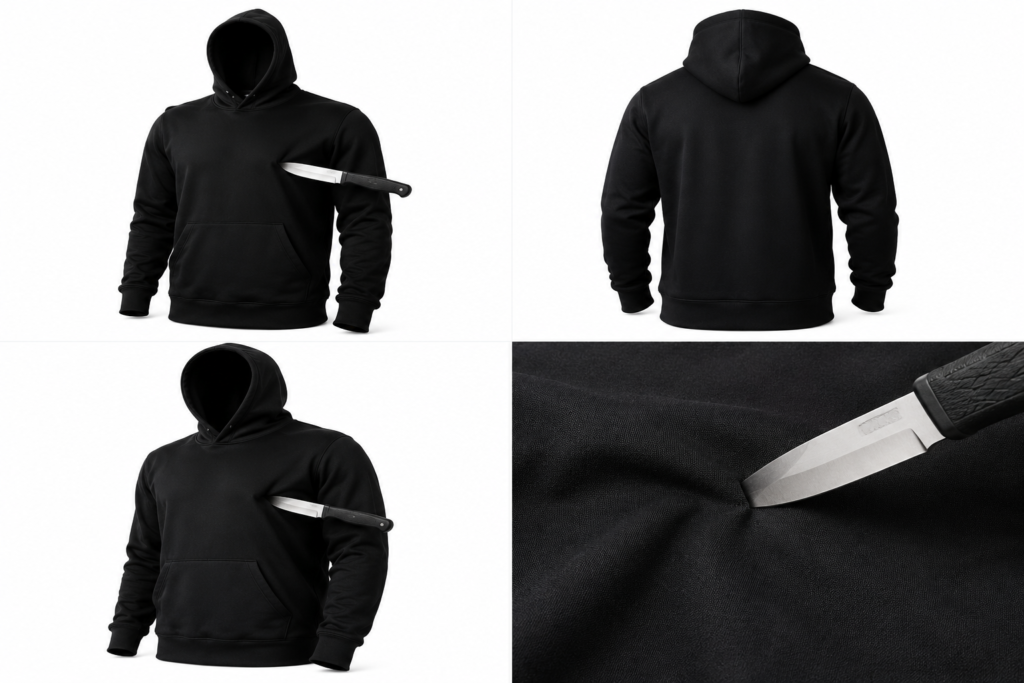
4. How to Choose Stab-Resistant Clothing
Choosing stab-resistant clothing is best approached as a structured comparison rather than an impulse purchase. Start by identifying the intended use, then review documented performance, coverage, fit, care requirements and commercial terms. Only after the product meets the necessary criteria should secondary factors such as colour, style or promotional value determine the final choice.
4.1 Start with intended use
Write down who will wear the garment, where it will be worn, what activities it must accommodate and what risk the product is expected to address. A garment selected for ordinary personal use may not be appropriate for a professional role with a formal protective-clothing requirement.
For workplace purchases, the employer should base the selection on an appropriate risk assessment and verify the applicable occupational safety and PPE requirements. If the required protection is unclear, seek advice from a competent safety professional before purchasing.
4.2 Check the protective-performance evidence
Look for product-specific documentation rather than broad statements about a brand or material. The evidence should relate to the exact product or protective component being sold.
Useful questions include:
- What test method was used?
- What did the test actually assess?
- Which product model and configuration were tested?
- What result or classification was recorded?
- Who performed the test?
- Are there restrictions on use or maintenance?
- Is the product being supplied as PPE, and if so, what conformity documents apply?
If the supplier cannot provide enough information to establish whether the garment meets the requirement, do not treat an unverified marketing claim as a substitute.
4.3 Evaluate coverage
A garment protects only the areas and risks addressed by its design and documented performance. Check whether the product covers the areas relevant to the intended use, and ask how the garment is intended to fit and be worn.
Do not infer full-body protection from a product image or a phrase such as “full protection”. If the product includes separate protective panels or removable components, check the coverage and instructions for the exact configuration being purchased.
4.4 Compare weight and comfort
Where weight is a priority, request the actual garment weight and compare like-for-like sizes and configurations. Ask about the materials, the intended wearing conditions and the manufacturer’s guidance on fit and layering.
Comfort matters, especially for clothing intended to be worn for extended periods. However, a comfortable garment is not necessarily suitable for a particular hazard. Documented performance and intended use remain the first filters.
4.5 Use the size guide carefully
Follow the current product-specific measurement instructions. Check whether the chart uses body measurements or garment measurements and whether the item is intended to be worn directly against the body or over another layer.
For a team order, gather size requirements before confirming quantities. If there is uncertainty, ask the supplier for clarification in writing. Confirm whether an exchange is possible and whether customised products are subject to different terms.
4.6 Review construction and materials
Product materials can affect weight, flexibility, care requirements and durability, but the name of a fibre or fabric does not prove that the finished garment achieves a particular level of protection.
Ask for the material composition and technical details that are relevant to the intended use. If a supplier refers to a reinforced composite or a specialist fibre, request evidence showing how the finished product was evaluated. Material-level properties and finished-garment performance are not interchangeable.
4.7 Confirm care and maintenance requirements
Protective garments may have care requirements that differ from those of ordinary clothing. Read the manufacturer’s instructions before washing, drying, ironing, repairing or altering the product.
Ask whether cleaning methods can affect the protective components, whether removable parts must be handled separately, and how the garment should be stored. Do not assume that a protective garment can be treated like an ordinary T-shirt simply because it looks similar.
4.8 Check warranty, returns and after-sales support
Read the current warranty and returns policy before buying. Confirm the time allowed for returns, whether items must be unused, how faults are reported, who pays return postage and whether customised or branded garments are excluded from ordinary exchanges.
StabApparel publishes a returns and exchanges page describing different return periods for the UK and international orders, along with conditions for used items and customised-logo products. Because policies can change and eligibility may depend on the circumstances, customers should read the current terms and contact the company if anything is unclear. StabApparel returns and exchanges.
4.9 Calculate the total cost
The advertised item price is only one part of the buying decision. Consider shipping, any applicable duties or taxes, possible return costs, care requirements, replacement needs and the cost of purchasing the correct sizes.
For organisations, also consider the cost of coordinating a size survey, distributing garments, maintaining records and replacing items when required. If a supplier offers bulk pricing or branded garments, ask for a written quotation that lists the quantities, specifications, delivery terms and any customisation charges.
4.10 Check delivery and destination terms
Before ordering across borders, confirm that the supplier ships to the destination country, that the product can be supplied for the intended use, and that the delivery estimate and import arrangements are clear.
Ask who is responsible for import duties and taxes, how delivery issues are handled, and whether any exclusions apply. A headline offer of free international shipping or covered import charges should be checked against the exact order and destination.
A supplier checklist before purchase
Before completing an order, make sure you can answer “yes” to the following:
- I understand the intended use of the garment.
- I have reviewed product-specific protective-performance documentation.
- I know what areas the garment covers and what its limitations are.
- I have checked the size guide and chosen the correct size.
- I understand the care, inspection and maintenance instructions.
- I have checked the warranty, returns and exchange conditions.
- I know the delivery cost, estimated delivery time and applicable import arrangements.
- I have verified the current promotional offer and its conditions.
- If buying for work, the product has been reviewed against the workplace risk assessment and relevant requirements.
If important information is missing, ask the supplier before ordering. A transparent answer is more valuable than a broad promise that cannot be checked.
End of Part 1. Part 2 covers Ireland, Denmark, Finland, Norway, Austria, Czechia, Portugal and Poland, followed by the framework for evaluating additional European markets.
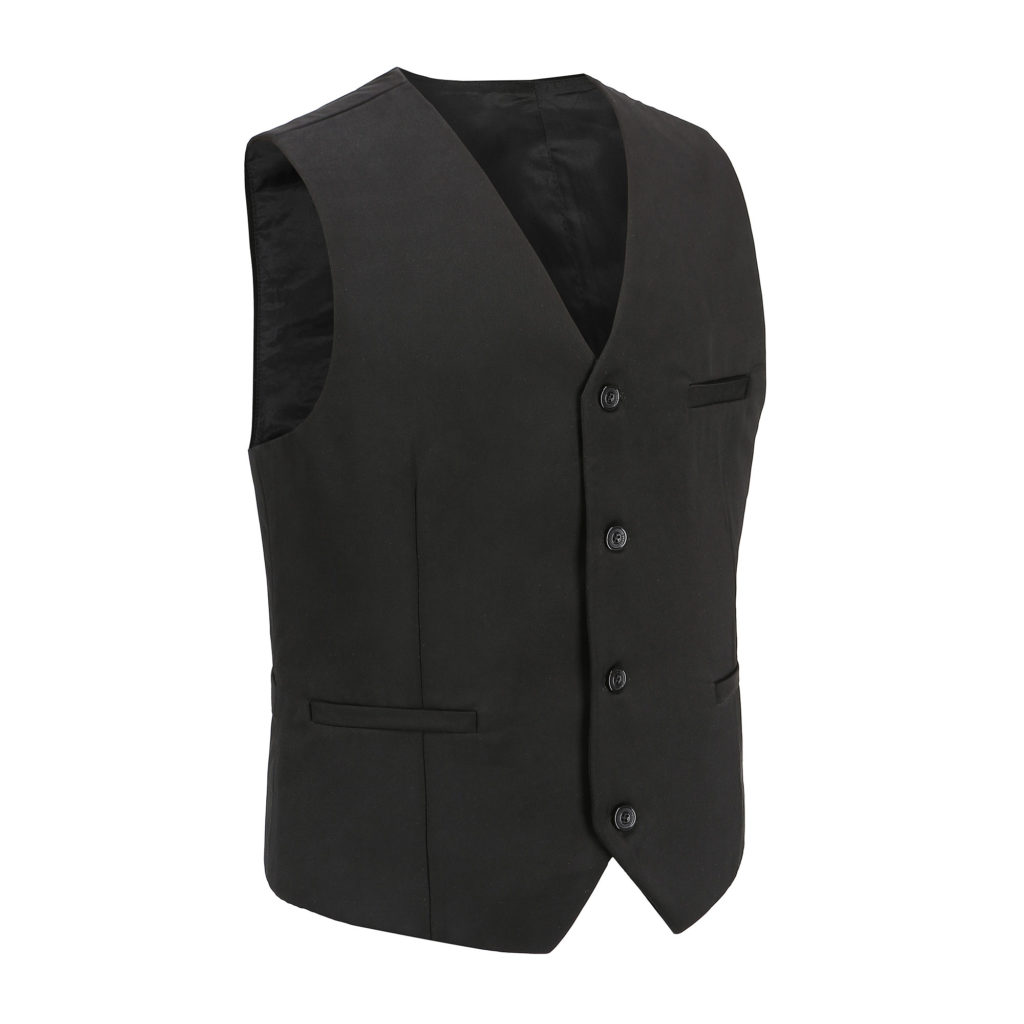
5. Stab-Resistant Clothing in Ireland
Buyers looking for stab-resistant clothing in Ireland should begin with the same priorities as buyers elsewhere: intended use, documented protective performance, garment coverage, fit, care requirements and transparent delivery terms. The right product for an individual consumer may differ from the clothing an employer needs to specify for a professional team.
Buying in Dublin, Cork and Galway
Dublin, Cork and Galway are useful locations to include when planning Irish ecommerce content because they represent distinct local search intents. However, mentioning a city in a page does not establish that demand exists or that the company has a local office, stockist or distributor there. City-level keywords should be prioritised only after search research confirms that people use them when looking for products.
For a buyer in Dublin, Cork or Galway, the practical questions remain consistent:
- Is the selected garment appropriate for the intended use?
- Can the supplier provide documentation supporting its protective claims?
- Does the size guide provide enough information to choose a suitable fit?
- What are the delivery estimate, shipping terms and returns conditions for Ireland?
- Are applicable duties and taxes included, and how is this confirmed?
- Can the supplier answer product questions before an order is placed?
Consumers should check the product page and current delivery policy rather than assume that every product or promotion is available on identical terms.
Everyday clothing and professional purchasing
Individual buyers may compare the appearance and comfort of T-shirts, jumpers, hoodies and vests. Professional buyers may also need product specifications, conformity documents, consistent sizing, care instructions and written quotations. Where garments are intended for workplace use, the organisation should assess the product against the relevant risk and occupational safety requirements.
StabApparel presents a range of protective apparel on its website and states that it serves customers in European markets. Irish customers should confirm the availability of their chosen product and obtain the relevant documentation before relying on its protective claims.
Irish keyword strategy
Potential search terms to research include:
- “stab-resistant clothing Ireland”
- “stab-resistant clothing Dublin”
- “lightweight stab-resistant clothing Ireland”
- “stab-resistant workwear Ireland”
- “stab-resistant clothing online Ireland”
These are keyword hypotheses, not verified search-volume or competition findings. Before publishing, check local search results, competing pages and the wording used by Irish buyers. Use the terms naturally rather than repeating them in every paragraph.
Ordering from Ireland
Before completing a purchase, confirm the selected size, delivery destination, delivery estimate, applicable import arrangements and return conditions. If the order is for a workplace, ask for written confirmation of the product specification and any bulk-order terms.
Explore the available StabApparel range and confirm the current product documentation and delivery terms for Ireland before ordering.
6. Stab-Resistant Clothing in Denmark
Customers in Denmark comparing stab-resistant clothing need clear product descriptions, reliable information about protective performance and straightforward purchasing terms. Localised content should help customers understand the products rather than simply translate English sales copy word for word.
Copenhagen, Aarhus and Odense
Copenhagen, Aarhus and Odense are candidate locations for Danish-focused content. A national landing page may be sufficient at first. Separate city pages should be created only if keyword research demonstrates distinct local search intent or if each page can offer genuinely useful local information.
For Danish consumers, product selection should start with the intended use and the evidence supporting the garment’s stated performance. Buyers should then check coverage, size options, materials, care instructions and delivery arrangements.
Professional customers should additionally consider workplace risk assessment, relevant PPE requirements, team sizing, procurement documentation and compatibility with other work equipment.
Danish-language terminology
The phrase “stikbeskyttende tøj” is one possible keyword candidate, but its naturalness and commercial relevance should be confirmed by a fluent Danish speaker and local keyword research. Other phrases may better reflect how consumers or professional buyers search for this category.
Before translating a product page, verify technical terms with a native speaker who understands the distinction between resistance to penetration, resistance to cutting and other protective properties. Avoid language that implies absolute protection unless the wording is appropriate and supported by the product evidence.
Potential terms to validate include:
- “stikbeskyttende tøj”
- “stab-resistant clothing Copenhagen”
- “protective clothing Denmark”
- “lightweight stab-resistant workwear Denmark”
English terms may be useful for some audiences, but their value should be established through actual search results rather than assumed.
Product documentation and purchasing terms
Danish buyers should be able to identify the exact garment being offered, understand its intended use and access the documentation that supports any protective claims. If the product is supplied as PPE within the EU, the relevant requirements under the EU PPE framework should be checked for that product and use.
Before ordering, confirm whether the selected size is available, how long delivery is expected to take, whether the returns policy applies to Denmark, and what happens if the garment does not fit. Professional buyers should also request a written quotation for team orders and confirm any branding or customisation requirements.
Danish customers can explore the current StabApparel range and request product information before deciding whether a garment meets their requirements. Localised page copy should be published only after its terminology and commercial details have been reviewed.

7. Stab-Resistant Clothing in Finland
For customers in Finland, a useful buying guide should make technical information understandable and help readers compare products without overstating what protective clothing can do. Product suitability, documentation, sizing and delivery are more valuable than generic claims about safety or comfort.
Helsinki, Tampere and Turku
Helsinki, Tampere and Turku are candidate locations for Finland-focused SEO. They can be mentioned in a national guide as examples of locations from which customers may research or order products, but their inclusion does not establish local demand or the need for three separate landing pages.
Finnish customers should assess the garment’s intended use, coverage, documented performance, fit and maintenance requirements. A professional organisation should also consider the identified workplace risks, employee needs, other required PPE and the process for replacing or maintaining protective garments.
Finnish-language product information
“Pistosuojavaatetus” is a keyword candidate supplied for research, not a confirmed best-performing search term. A fluent Finnish speaker should review the phrase and check whether it matches the language used by consumers, safety professionals and procurement teams.
The final page should use technically accurate Finnish terminology for stab resistance, cut resistance and protective workwear. These concepts should not be merged into one vague category. A product that has been assessed for one property should not be described as providing another without evidence.
Candidate terms for validation include:
- “pistosuojavaatetus”
- “stab-resistant clothing Helsinki”
- “protective workwear Finland”
- “lightweight stab-resistant clothing Finland”
Use Finnish-language research to establish whether the page should prioritise Finnish terms, English terms or different language versions for distinct audiences.
Comfort, fit and delivery
A buyer should consult the product-specific size guide and determine whether the garment is intended to be worn against the body or over other clothing. Ask for the garment’s weight if it is an important factor, and do not assume that a lower weight indicates equivalent protective performance.
Before placing an order, Finnish customers should confirm delivery estimates, shipping costs, the handling of applicable taxes or duties, and the current returns policy. Professional purchasers should confirm stock availability, the required size range and the documentation that will accompany the order.
Explore the current StabApparel products and request clarification on their specifications, intended use and delivery to Finland before purchasing.

8. Stab-Resistant Clothing in Norway
Buyers in Norway should evaluate protective garments using the same core principles as customers in other European markets: clear intended use, product-specific evidence, appropriate coverage, correct fit and transparent commercial terms. They should also confirm the legal and import arrangements applicable to Norway rather than assuming that every detail is identical to an EU destination.
Oslo, Bergen and Trondheim
Oslo, Bergen and Trondheim are potential locations for targeted Norwegian content. They can be included in a national buying guide, but city-specific landing pages should depend on demonstrated search intent and the ability to provide meaningful local information.
For individual buyers, the decision should focus on the product’s stated purpose, protective documentation, fit, care instructions and delivery terms. Professional organisations should consider workplace risks, relevant protective-equipment requirements, staff sizing, product maintenance and compatibility with other required equipment.
Norwegian-language terminology
“Stikksikker bekledning” is a candidate phrase that needs review by a fluent Norwegian speaker. Search research should establish whether it reflects the language real buyers use and whether alternative terms better match consumer or professional purchasing intent.
Potential keywords to validate include:
- “stikksikker bekledning”
- “stab-resistant clothing Oslo”
- “protective workwear Norway”
- “lightweight protective clothing Norway”
The page should distinguish between clothing intended for ordinary wear and products intended to serve as professional PPE. Translation should preserve these distinctions rather than use a single term for every protective property.
Delivery and regulatory considerations
Norway is not an EU member state, so the seller and buyer should confirm the relevant market-access, conformity, customs and tax arrangements for the particular product and transaction. Norway’s participation in the European Economic Area does not mean that every shipping or import process is identical to domestic delivery within an EU country.
Before ordering, confirm the destination is supported, the estimated delivery time, the treatment of import charges, and the procedure for returns or faulty items. Professional buyers should request product documentation and written order terms before committing to a larger purchase.
Norwegian customers should check the available StabApparel range and confirm product suitability, documentation and delivery arrangements directly with the company.
9. Stab-Resistant Clothing in Austria
Austrian customers comparing stab-resistant clothing need accurate product information and natural German-language descriptions. A useful local buying guide should explain what the garment is intended to do, what evidence supports its protective claims, and which purchasing terms apply to an order delivered to Austria.
Vienna, Graz and Linz
Vienna, Graz and Linz are candidate locations for Austrian ecommerce content. A national German-language page may be the most sensible starting point. City-specific pages should be developed only when keyword research identifies a distinct audience or when each page can provide genuinely different information.
Buyers should evaluate product suitability, protective documentation, coverage, fit, care instructions and returns. Organisations should also consider their risk assessment, any applicable workplace requirements, the number of employees to be equipped and the documentation needed for procurement.
Austrian German terminology
The phrases “stichhemmende Kleidung”, “Stichschutzkleidung Wien” and “Stichschutzkleidung Österreich” are research candidates. They should be reviewed by a fluent German speaker with awareness of Austrian usage. Search research should determine which terms match the language of actual buyers.
The content must distinguish between resistance to stabbing or penetration, cut resistance and slash resistance. A localised product page should not imply that a garment meets a particular standard unless the product’s supporting documentation confirms it.
Comparing products and placing an order
Austrian customers should check the product-specific size guide, available colours and current specifications. If comfort and weight are important, request comparable measurements rather than relying solely on promotional adjectives.
For workplace orders, request a written quotation that specifies the garment, quantities, sizes, any customisation, delivery timing and return conditions. Check that the documentation is appropriate for the product’s intended use and legal classification.
Before completing a purchase, confirm shipping arrangements to Austria and whether the advertised promotion applies to the selected products and destination.
Customers in Vienna, Graz, Linz and elsewhere in Austria can review the current StabApparel range and request product details before ordering. The final Austrian page should use natural German, verified commercial terms and product-specific facts rather than generic city-name substitutions.
10. Stab-Resistant Clothing in Czechia
Customers in Czechia comparing stab-resistant clothing should be able to find clear product information, understandable technical terminology and transparent delivery terms. A useful Czechia-focused page should help buyers assess suitability rather than suggest that all garments marketed as protective offer the same performance.
Prague, Brno and Ostrava
Prague, Brno and Ostrava are candidate locations for localised content. Their value should be confirmed through search research. If buyers primarily search at a national level, a well-developed Czech-language country page may serve them better than multiple city pages with nearly identical content.
For individual buyers, the main considerations are the garment’s intended use, coverage, size, care instructions and documented performance. Professional buyers should also consider the relevant workplace risk assessment, product conformity documentation, employee sizing and the conditions under which garments must be maintained or replaced.
Czech-language keyword research
The phrase “ochranné oblečení proti bodnutí nožem” is a candidate keyword to be checked by a fluent Czech speaker. It should not be treated as a confirmed search-volume winner without research.
Potential terms include:
- “ochranné oblečení proti bodnutí nožem”
- “stab-resistant clothing Prague”
- “protective workwear Czechia”
- “lightweight protective clothing Czech Republic”
Research should determine which Czech-language phrases are used by consumers and which are more relevant to professional procurement. Product terminology should remain precise: a claim about resistance to cutting does not automatically establish resistance to penetration.
Product suitability and online ordering
Before ordering, customers should check the product’s size guide, the intended wearing conditions and the evidence available for its protective claims. They should also confirm delivery estimates, shipping terms, the handling of applicable charges and the return process for orders delivered to Czechia.
Organisations buying for a team should obtain a written specification and quotation. The documents should identify the products and quantities being supplied, the applicable sizing and any agreed customisation.
Customers in Prague, Brno, Ostrava and other parts of Czechia should review the current StabApparel catalogue and confirm the documentation and delivery terms for their order. Publish Czech-language product claims only after linguistic and technical review.
11. Stab-Resistant Clothing in Portugal
A Portuguese buying guide should help customers distinguish between a garment’s appearance and its documented protective performance. It should also explain how to verify sizing, shipping, returns and product suitability before making an online purchase.
Lisbon, Porto and Braga
Lisbon, Porto and Braga are candidate locations for localised content. Their inclusion in a national guide can help organise examples of potential customer locations, but it does not prove local demand or justify separate landing pages on its own.
Consumers should begin by identifying the purpose of the garment and reviewing the product’s documented performance and coverage. They should then compare fit, comfort, care requirements, delivery terms and the available customer support.
Professional buyers should consider the specific workplace risks, employee requirements, compatibility with other PPE and the documentation needed to approve the product for use.
Portuguese-language terminology
“Roupa resistente a facadas” is one candidate phrase for research. A fluent Portuguese speaker should check its naturalness, regional usage and suitability for commercial search intent. Other expressions may be more appropriate for professional protective clothing or technical product descriptions.
Candidate terms include:
- “roupa resistente a facadas”
- “stab-resistant clothing Lisbon”
- “vestuário de proteção”
- “protective workwear Portugal”
Local keyword research should determine the phrases that belong on a consumer page and those that suit a professional procurement page. Avoid repeating a literal translation if it does not reflect how local customers speak or search.
Delivery, charges and returns
Portuguese customers should confirm that the chosen product can be delivered to their address and check the estimated delivery time and any applicable charges. They should also read the current returns policy, particularly if they are ordering a customised garment or buying multiple sizes for a team.
Where a promotion includes a free garment, free shipping or coverage of import duties and taxes, the buyer should verify the exact conditions for the order. Promotional copy should not be presented as universally applicable unless the company has confirmed that it is.
Customers in Lisbon, Porto, Braga and across Portugal can explore StabApparel’s current products and ask the company to clarify product specifications and delivery arrangements before ordering.
12. Stab-Resistant Clothing in Poland
Buyers in Poland should look for clear explanations of protective performance, practical product information and transparent commercial terms. Localised content should answer real purchasing questions and use technically accurate Polish, not simply repeat an English page with a translated heading.
Warsaw, Kraków and Wrocław
Warsaw, Kraków and Wrocław are candidate locations for Polish ecommerce content. They may be useful in a national guide, but separate city pages should be created only when search research or a real commercial need supports them.
Individual customers should compare the intended use, product documentation, coverage, fit, materials and care requirements. Organisations should also review the workplace risk assessment, applicable protective-equipment requirements, sizing across the workforce and the availability of written product documentation.
Polish-language terminology
The phrase “odzież odporna na przebicie nożem” is a keyword candidate that requires review by a fluent Polish speaker. The final content should distinguish natural consumer language from terminology used by professional buyers and occupational safety specialists.
Potential terms to research include:
- “odzież odporna na przebicie nożem”
- “stab-resistant clothing Warsaw”
- “odzież ochronna”
- “protective workwear Poland”
Validate search intent before selecting a primary keyword. Ensure that Polish descriptions distinguish between cut resistance and stab resistance, and that no technical claim exceeds the evidence available for the specific product.
Buying for individual or professional use
Before ordering, Polish customers should check the size guide, product specifications, delivery estimate, shipping terms and returns policy. If the garment is being purchased for work, confirm that its documented performance is appropriate for the identified risk and that all relevant product requirements have been addressed.
For team orders, request a written quotation that identifies quantities, sizes, product options, delivery timing and any branding or customisation terms. Confirm the current promotion directly rather than assuming that a free-gift offer applies to every order.
Customers in Warsaw, Kraków, Wrocław and elsewhere in Poland can review StabApparel’s available range and request product-specific information before placing an order.
13. Other European Markets Worth Validating
After establishing accurate product information and a workable delivery process for the initial eight markets, StabApparel can assess whether additional countries offer a credible commercial opportunity. Expansion should be based on evidence, not on assumptions that a country or city has no competitors.
How to evaluate a new market
A structured assessment should include:
- Search demand: Determine whether people search for the product category and which phrases indicate purchase intent.
- Competitive coverage: Review the suppliers, retailers and product pages already serving those searches.
- Language requirements: Assess the cost and quality requirements of translating product information, technical documents and customer service.
- Shipping feasibility: Confirm delivery availability, costs, likely delivery times and return logistics.
- Regulatory requirements: Verify product classification, applicable PPE requirements, market-access rules and any destination-specific obligations.
- Qualified demand: Distinguish general interest from enquiries and purchases by customers who need the actual products offered.
- Conversion potential: Check whether product information, checkout, payment options and customer support are suitable for the market.
- Customer service: Establish how questions, returns, defects and after-sales support will be handled in the relevant language.
A country with many searches is not automatically a profitable market. Search demand can be dominated by informational interest, irrelevant product types or competitors with stronger documentation and distribution. Conversely, a smaller market may be worthwhile if the product meets a clearly defined need and the cost of serving it is reasonable.
Validate before investing
Before translating an entire catalogue, test a market with a well-researched landing page, accurate delivery details and a clear way for customers to request product information. Measure qualified enquiries, product-page engagement, conversion rate, order value, returns and customer-service effort.
Avoid creating dozens of nearly identical pages by swapping country or city names. Each page should provide unique information that genuinely helps customers in that location.
The strategic objective is not to claim that a market is competition-free. It is to identify places where StabApparel can offer a relevant product, provide credible information, serve customers reliably and compete on a defensible combination of documented performance, product suitability, service and value.
14. Buying Stab-Resistant Clothing for Specific Industries
Different industries have different operational requirements. The right garment for one role may be unsuitable for another, even when the clothing looks similar. Employers should begin with a workplace risk assessment, identify the protection required and verify that the selected product is appropriate for the task.
The following sections outline purchasing considerations for several professional audiences. They are not declarations that any particular StabApparel product is suitable for every occupation.
Security companies and professional security personnel
Security teams may work in environments where staff interact with members of the public, manage access or respond to difficult situations. Employers considering protective clothing should define the relevant hazards and establish which protective performance is required before comparing products.
Procurement criteria may include:
- Documented performance appropriate to the identified risk.
- The areas of the body covered by the garment.
- Fit and compatibility with the uniform.
- Freedom of movement for the duties performed.
- Compatibility with other required PPE.
- Clear care, inspection and replacement instructions.
- A suitable range of sizes for the team.
- Reliable delivery, returns and after-sales support.
A discreet appearance may be desirable in some roles, while other organisations require visible branded uniforms. Appearance should be considered after the essential technical and occupational requirements have been established.
For team purchases, request a written quotation that specifies the product, sizes, quantities, delivery terms and any branding. Ask for the product documentation to be reviewed by the person responsible for health and safety or procurement.
Hospitality and public-facing workers
Hospitality staff may work in restaurants, bars, hotels, entertainment venues and other public-facing environments. Their work can involve extended periods on their feet, movement between areas and interaction with customers.
Comfort and fit are therefore important, but a garment must still be appropriate for the specific risk. Buyers should consider how it works with the uniform, whether the fit permits the required tasks and whether the garment’s care instructions are practical for the workplace.
Employers should not assume that a garment marketed to security personnel is automatically appropriate for all hospitality roles. The relevant risk assessment and documented product performance should guide the decision.
Retail and customer-facing staff
Retail organisations may have staff working across sales floors, stockrooms, customer service areas and other environments. Requirements can differ between sites and job functions.
A purchasing assessment should establish whether protective clothing is necessary, which hazards it is intended to address and whether the proposed product is suitable. If an organisation chooses to buy protective garments, it should ensure that employees understand their intended use, limitations and care instructions.
For multi-site purchasing, consistency can be valuable. A clear product specification, size guide, written order and agreed process for replacing garments can make procurement easier to manage.
Transport-related occupations
Transport-related workers may operate in vehicles, at stations, in delivery environments or at locations where they interact with the public. Clothing requirements depend on the job, the working conditions and the hazards identified by the employer.
Buyers should assess fit while seated and moving as appropriate to the role, as well as compatibility with required uniforms and other PPE. They should also consider whether the product’s coverage and documented performance match the intended use.
No garment should be described as universally suitable for drivers, couriers or transport staff without evidence supporting the particular application.
Healthcare and community-facing organisations
Healthcare and community-facing work includes a wide range of tasks and environments. A protective garment suitable for one role may be unsuitable for another because of differences in hygiene, infection-control procedures, movement, patient contact or other occupational requirements.
Organisations should consult the relevant safety, clinical and procurement professionals before selecting a garment. They should confirm the product’s intended purpose, care instructions and compatibility with the working environment.
Do not assume that stab-resistant clothing also provides needle-stick protection, infection-control properties or other specialist protection unless those properties are explicitly documented for the product.
Corporate and organisational procurement
For larger purchases, the procurement process should be documented. The organisation should record the identified need, selection criteria, product specifications, approval process, quantities, sizes and delivery requirements.
A useful procurement file may include:
- The relevant risk assessment or statement of need.
- Product-specific test reports and conformity documentation, where applicable.
- The approved garment and size specification.
- A written quotation and confirmed delivery terms.
- Warranty, returns and defect procedures.
- Care and maintenance instructions.
- Any branding or customisation approval.
- The process for issuing, inspecting and replacing garments.
Employers remain responsible for ensuring that equipment selected for staff is appropriate for the workplace and meets the applicable requirements. A supplier’s marketing materials should not replace a competent risk assessment.
How StabApparel can support professional buyers
StabApparel presents a professional workwear offering on its website and refers to support for organisational orders, including bulk pricing and branding options. Buyers should confirm the current availability and terms of those services directly with the company.
For an efficient enquiry, include the destination country, intended work activity, approximate number of wearers, required sizes, preferred garment types and any branding requirements. Ask for the available product documentation before making a decision.
The goal is to specify clothing that meets the organisation’s requirements, not to select a product simply because it is promoted for a particular industry.
15. Pricing, Value and the StabApparel Offer
The price of protective clothing should be considered alongside its intended use, documented performance, coverage, construction, fit, care requirements and expected service life. A low purchase price does not necessarily represent good value if the product is unsuitable or the required documentation is missing.
Equally, a higher price does not prove that a garment offers better protection. Buyers should compare evidence and specifications rather than use price as a substitute for technical evaluation.
What can influence the price?
Depending on the product, relevant cost factors may include:
- Materials and garment construction.
- The design and extent of protective coverage.
- Documented testing and conformity requirements.
- Available sizes and garment configurations.
- Custom branding or other customisation.
- Warranty and after-sales support.
- Delivery charges and destination-specific costs.
- Return or exchange arrangements.
- Maintenance and replacement requirements.
Not every supplier includes the same features in its advertised price. Buyers should compare equivalent products and confirm what is included before deciding.
Calculate the total cost
For an individual buyer, total cost may include the garment, delivery, any applicable taxes or duties, and potential return costs. For an organisation, the calculation may also include size collection, staff distribution, training, maintenance, replacement and administration.
Where an order is intended for a team, request a written quotation with all agreed terms. Confirm whether the price covers the selected sizes, quantities, custom branding and delivery destination.
Do not assume that a promotional price or free-gift offer makes an otherwise unsuitable garment a good purchase. The product must first meet the buyer’s documented requirements.
The StabApparel promotion
StabApparel’s website currently advertises a promotional free protective garment, free shipping and coverage of local taxes and import duties where required. The site also contains references to different gift options and other promotions. These offers can change and may have conditions, so the exact offer should be confirmed before publication or purchase. See the current StabApparel website.
The promotional wording should be clear about:
- Which purchases qualify.
- Whether the free item is a vest, gloves, protective sleeves or another product.
- Whether the customer can choose the gift.
- Whether any minimum order or product exclusions apply.
- The promotion’s start and end dates.
- Which countries and delivery destinations are included.
- What “free shipping” covers.
- Which duties and taxes are covered and how the arrangement works.
- Whether the promotion can be combined with other discounts.
If the company confirms that an eligible order includes a free stab vest or stab-resistant gloves, free shipping and coverage of applicable import duties and taxes, the page can state that offer with a link to the relevant terms. If the offer varies by product or destination, explain those limitations next to the claim.
Avoid creating urgency with an expired date, an unverified discount or a statement that an offer is ending unless the information is current and accurate.
Value means suitability and transparency
A responsible buying decision balances cost with the product’s actual capabilities and limitations. A buyer should be able to understand what they are paying for, what documentation is available, how the garment should be used and what happens if the product does not fit or arrives faulty.
For StabApparel, clear product specifications, current delivery information, transparent promotion terms and accessible customer support can help reduce uncertainty and improve the buying experience.
Before ordering, explore the available StabApparel products and confirm the current price, specifications, promotional eligibility and delivery terms for your country.
16. Product Care, Fit and Long-Term Ownership
Protective clothing should be cared for according to the manufacturer’s instructions. A garment may look like ordinary clothing while containing protective components that require specific cleaning, storage or maintenance procedures.
Follow the product instructions
Read the care label and user instructions before washing, drying, ironing, storing or repairing the garment. Do not assume that ordinary laundry methods are appropriate simply because the garment resembles a T-shirt, jumper or hoodie.
If the instructions are unclear, ask the supplier for clarification. Avoid unapproved alterations, repairs or replacement components that could affect the garment’s intended performance.
Check fit and condition
The garment should fit as intended and be worn in accordance with the manufacturer’s instructions. If it becomes damaged, no longer fits correctly or has been subjected to conditions that may affect its protective components, consult the supplier’s guidance before continuing to rely on it.
For workplace use, employers should establish a suitable process for issuing garments, providing care instructions and replacing products when required.
Keep records for professional purchases
Organisations may find it useful to record the product model, date of purchase, size, issue date and any relevant inspection or replacement information. The level of record-keeping should be appropriate to the workplace and the product’s intended use.
Understand the limits of home testing
Do not attempt to prove a garment’s protective capabilities by carrying out improvised knife, needle or penetration tests. Such tests are uncontrolled, may damage the product and cannot replace appropriate laboratory testing or conformity assessment.
If the performance of a garment is uncertain, request its supporting documentation from the supplier.

17. Frequently Asked Questions
1. What is stab-resistant clothing?
Stab-resistant clothing is protective apparel designed to resist penetration under specified conditions. Its actual performance depends on the product’s construction, tested characteristics, coverage and intended use. Buyers should review product-specific documentation rather than rely solely on a marketing label.
2. Is stab-proof clothing completely stab-proof?
No garment should be assumed to provide absolute protection. Terms such as “stab-proof” are sometimes used colloquially in marketing, but they should not be interpreted as a guarantee that a wearer cannot be injured. Look for documented test results, intended-use information and clearly stated limitations.
3. What is the difference between stab-resistant and cut-resistant clothing?
Stab resistance relates to resistance to penetration by a pointed object under defined conditions. Cut resistance relates to resistance to cutting by a sharp edge. The tests and performance criteria can differ, so evidence for one property should not automatically be treated as proof of the other.
4. Can stab-resistant clothing be lightweight and comfortable?
A garment may be designed with comfort and weight in mind, but these qualities must be assessed alongside its documented performance and coverage. Ask for actual garment weight, sizing information, materials and care instructions where available. A lighter garment is not automatically equivalent to a heavier one in protective performance.
5. What should buyers check before purchasing protective clothing?
Confirm the intended use, product-specific test documentation, coverage, fit, care requirements, applicable conformity documentation, warranty, returns and delivery terms. If the garment is intended for work, make sure it is assessed against the relevant workplace risks and requirements.
6. Where can I buy stab-resistant clothing in Ireland?
Start by reviewing suppliers’ current catalogues and checking whether the selected product can be delivered to Ireland. Compare product documentation, sizing, care instructions, returns and the total cost. StabApparel’s website presents a range of protective clothing, but customers should confirm the current product details and delivery terms before ordering.
7. Where can I buy stab-resistant clothing in Denmark?
Compare available suppliers based on documented performance, product suitability, size options and delivery terms for Denmark. If buying from StabApparel, confirm the specifications and any applicable promotional conditions for the selected order.
8. Where can I buy stab-resistant clothing in Finland?
Review the available product catalogues and check the evidence supporting each garment’s protective claims. Finnish customers should also confirm sizing, care requirements, shipping estimates, returns and any applicable import arrangements before ordering from an international supplier.
9. Where can I buy stab-resistant clothing in Norway?
Compare suppliers that can deliver to Norway and provide suitable product documentation. Confirm the destination-specific delivery, tax and customs arrangements, as well as the intended use and limitations of the garment.
10. Where can I buy stab-resistant clothing in Austria?
Review the available suppliers and compare product-specific evidence, coverage, fit, care and delivery terms. Buyers should ensure that technical claims are clearly documented and that any applicable PPE requirements are addressed for the intended use.
11. Where can I buy stab-resistant clothing in Czechia?
Compare suppliers based on product suitability, technical documentation, sizing, care and delivery. Customers considering an international order should confirm the returns process and the treatment of applicable taxes or other charges.
12. Where can I buy stab-resistant clothing in Portugal?
Check the supplier’s current product range, destination coverage and delivery terms. Before purchasing, verify the protective-performance evidence, size guide, care instructions, returns policy and any conditions attached to promotional offers.
13. Where can I buy stab-resistant clothing in Poland?
Compare the available products and suppliers using the intended use, documented performance, coverage, fit and total cost. Professional buyers should request the relevant product documentation and a written quotation before approving a team order.
14. How should professional buyers evaluate protective garments?
Professional buyers should begin with a workplace risk assessment and identify the required protective performance. They should then verify product documentation, coverage, fit, compatibility with other PPE, maintenance requirements, warranty, supply availability and conformity with relevant requirements.
15. Does StabApparel offer an additional free vest or gloves?
StabApparel advertises free protective-garment promotions on its website, including a free vest and references to gloves or other protective items. The exact gift and eligibility conditions should be confirmed at the time of purchase. Buyers should not assume that every product, order or destination qualifies.
16. Does StabApparel offer free shipping?
The website advertises free shipping, including international delivery. Customers should confirm the current offer, eligible destinations, exclusions and shipping method for their particular order before checkout.
17. Are import duties and taxes included?
StabApparel’s website states that it covers local taxes and import duties where required. Buyers should confirm how this arrangement applies to their destination and order, including any exclusions or special conditions. Do not assume that every possible charge is covered without checking the current terms.
18. How can buyers check sizing, returns and product documentation?
Read the product-specific size guide, current returns policy and available technical documents before ordering. If information is missing, contact the supplier and request clarification in writing. For professional purchases, keep the product specification and agreed order terms with the procurement record.
19. Is stab-resistant clothing the same as body armour?
Not necessarily. “Body armour” can refer to products designed for different types of threats and tested under different requirements. A stab-resistant garment should not be assumed to provide ballistic protection unless that capability is explicitly supported by appropriate documentation.
20. Is stab-resistant clothing suitable for every job?
No. Suitability depends on the workplace risks, the garment’s documented capabilities, its coverage and the conditions of use. Employers should conduct an appropriate risk assessment and confirm that the product meets applicable occupational safety and PPE requirements.
21. Can protective clothing be washed like ordinary clothing?
Not automatically. Follow the garment’s manufacturer instructions, as washing, heat, detergents or alterations may affect protective components. If the care instructions are unclear, ask the supplier before cleaning the product.
22. Should I choose a garment based on weight alone?
No. Weight is one factor in comfort, but it does not establish protective performance. Compare the intended use, coverage, relevant test documentation, fit and care requirements as well as weight.
18. Final Buyer Checklist and Conversion Section
Before buying stab-resistant clothing, use this checklist to confirm that the product is appropriate for the intended use.
- I understand the garment’s intended purpose and limitations.
- I have reviewed the available product-specific performance documentation.
- I know which areas the garment covers.
- I have checked the size guide and selected the correct size.
- I understand the materials, care instructions and maintenance requirements.
- I have checked the warranty, returns and exchange conditions.
- I have confirmed the delivery destination, estimated delivery time and total cost.
- I have checked whether duties, taxes and promotional offers apply to my order.
- If the purchase is for work, the product has been reviewed against the relevant risk assessment and requirements.
Explore StabApparel’s protective clothing
StabApparel presents a range of protective garments, including T-shirts, polo shirts, jumpers, hoodies, vests and professional workwear. The most suitable choice depends on your requirements and the evidence available for the exact product.
Explore the current catalogue at StabApparel.com, review the product information and contact the company if you need clarification before ordering.
For a more useful product enquiry, include:
- Your delivery country.
- Whether the purchase is for an individual or an organisation.
- The type of garment you are considering.
- Your preferred size or the approximate size range required.
- The intended use.
- The product documentation you need to review.
- The quantity required, if you are buying for a team.
Stab-resistant clothing should be selected carefully, based on documented performance and suitability rather than appearance or promotional language alone. Taking time to verify the product and its conditions of use helps you make a more informed purchasing decision.
19. Sources and Further Reading
The following sources support the article’s general discussion of protective clothing and relevant product requirements. They do not establish that any particular StabApparel garment meets a specific protection level or standard.
- European Commission — Personal protective equipment (PPE). Overview of Regulation (EU) 2016/425, PPE requirements and conformity information.
https://single-market-economy.ec.europa.eu/sectors/mechanical-engineering/personal-protective-equipment-ppe_en - EUR-Lex — Regulation (EU) 2016/425. The legal text governing the design, manufacture and placing on the EU market of PPE within its scope.
https://eur-lex.europa.eu/legal-content/EN/TXT/?uri=CELEX:32016R0425 - International Organization for Standardization — ISO 13998:2003. Standard concerning protective aprons, trousers and vests against cuts and stabs by hand knives. Its applicability to any particular product must be confirmed.
https://www.iso.org/standard/29609.html - UK Health and Safety Executive — Product safety and supply. Guidance on supplying PPE in Great Britain.
https://www.hse.gov.uk/ppe/product-safety-and-supply.htm - StabApparel — Main website. Current catalogue and the company’s published product and promotional claims.
https://www.stabapparel.com/ - StabApparel — Returns and exchanges. Published returns, exchange and customised-product terms. Customers should review the current policy before purchase.
https://www.stabapparel.com/returns-exchanges/ - StabApparel — Product catalogue. The current product pages should be reviewed individually for available specifications, sizing, intended use and supporting documentation.
https://www.stabapparel.com/shop/